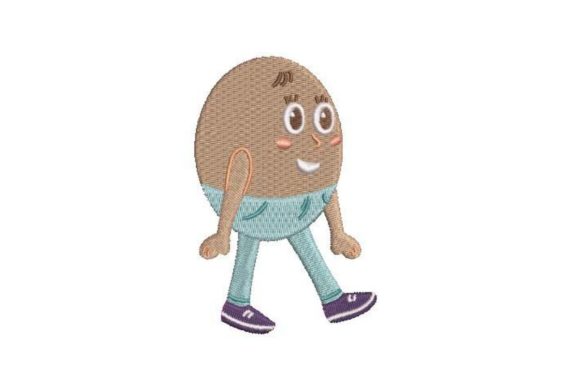
Egg Person: A Fairy Tale Embroidery Design for Real Creative Projects
When a design file named 'Egg Person' lands in your embroidery library, your first thought isn't about fairy tales. It's about potential. What kind of real project does this character evoke? As a designer who stitches for clients and my own small shop, my immediate impression is one of playful, gentle charm. The name suggests a simple, rounded form, which in embroidery terms is often a good sign—clean shapes usually stitch out cleanly.
The Mood and Personality Stitched Into the Fabric
Egg Person feels inherently friendly and whimsical. It’s not overly detailed or aggressive in its theme, which gives it a versatile personality. This isn't a high-drama design; it’s a soft, approachable character. That mood translates directly into product appeal. Imagine this design on a child's cotton tote bag for library trips, or subtly embroidered on the corner of a nursery pillow cover. It creates a sense of gentle storytelling without being too literal. For a crafter or small business owner, that’s valuable. It allows the finished product to feel handmade and special, not mass-produced.
Where Egg Person Shines in Your Project Lineup
This embroidery design feels naturally suited to projects where softness and charm are the selling points. I would immediately consider it for:
- Baby and children’s items: Embroidered gently onto the chest of a organic cotton sweatshirt or the back of a knit hat. The rounded theme suggests safety and simplicity.
- Home décor accents: A series of Egg Person designs stitched onto linen tea towels or the front of a canvas pillow cover for a touch of understated fairy tale whimsy in a kitchen or nursery.
- Personalized gifts: As a standalone feature on a cotton tote bag, perhaps paired with a simple name in a complementary font. It feels giftable—a unique touch that doesn’t overwhelm the item.
- Small shop merchandise: For an Etsy seller focusing on gentle, playful themes, this could be a consistent brand asset on aprons, simple patches, or lightweight blankets.
The key here is that the visual personality isn't niche. It’s broadly charming, which means it can fit into many product categories without seeming out of place.
Practical Stitching: How to Make Egg Person Look Brilliant
The product description says it “will stitch out wonderfully,” and from a designer’s perspective, that promise hinges on our preparation. Based on the theme and likely composition, here’s how I’d approach it for a real client project, like a custom embroidered baby sweater.
First, the fabric texture is critical. A smooth, tightly woven cotton or linen will give the clearest definition if the design has any fine lines or satin stitch borders. For a sweater, which has more texture, I’d use a firm stabilizer to prevent puckering and ensure those rounded 'egg' shapes stay crisp. The stitch density is something I’d be mindful of. Designs with large fill areas can become too dense on lightweight fabrics. I’d always run a test on scrap fabric of the exact type I’m using for the final product—it’s the only way to see how the embroidery file truly interacts with your material.
Navigating the Potential Pitfalls
While the design seems simple, there are always considerations. On dark fabric, I’d plan my thread colors carefully to ensure contrast—a light-colored Egg Person on a navy sweatshirt could pop beautifully. On stretchy fabric like knit caps, extra stabilizer and possibly a smaller hoop size might be needed to maintain shape integrity. The description mentions multiple embroidery files, which is excellent. This often means different sizes or formats. I would confirm the available hoop sizes and choose one that leaves adequate margin on my final product. For a curved surface like a cap, a smaller, condensed version would be ideal.
Also, consider small details. If the design includes tiny features like facial expressions or miniature decorative accents, they might get lost on very textured fabrics or in very small stitch-outs. Testing reveals this instantly.
From Stitch to Sale: Building Customer Trust with Quality
When you use a design like Egg Person for a commercial embroidery project or your craft business, the final stitch quality affects everything. A clean, puckering-free embroidery job on a tote bag signals professionalism. It builds customer trust. A buyer looking at your Etsy listing photo can see if the stitches are neat, the design is centered, and the colors are vibrant. This directly impacts the perceived value of your handmade product.
Using a well-digitized design that stitches out reliably is a foundational part of that. It ensures brand consistency—every tote bag or pillow cover you sell looks equally excellent. For a personalized gift business, that reliability is what lets you promise a timely, beautiful product. The friendly, approachable nature of Egg Person also enhances giftability. It feels like a thoughtful, crafted choice, not a generic one.
A Real Scenario: Preparing for a Holiday Gift Collection
Imagine you’re preparing a line of embroidered holiday kitchen towels for your small shop. You choose Egg Person for its gentle, non-seasonal but festive-friendly charm. You stitch it on creamy linen. Before running the first towel, you test on a linen scrap to check stitch density and color palette. You decide on a soft eggshell white and pale yellow thread scheme. Seeing it stitched, you realize the design’s clarity makes it look professional and charming—perfect for a boutique product. You create printable mockups for your online listing, showing it on a towel, and the visual appeal is clear. Because the design stitched cleanly, your photos look authentic, boosting buyer engagement. You’re confident offering it because your test run proved its viability.
Essential Designer Notes Before You Hoop the Fabric
Before committing Egg Person to any project, especially for commercial use, here’s my practical checklist:
- Always test the design on scrap fabric first, replicating the exact final conditions (fabric type, stabilizer, hoop size).
- Review the stitchout for any overly dense fill stitch areas that might stiffen lightweight fabrics.
- Check thread color contrast against your background fabric. Sometimes a design needs a different palette than you first imagined.
- Inspect any small details in the test run. Do they stitch clearly, or do they blur?
- Test the design concept in both light and dark fabric mockups to gauge its versatility.
- Use the proper stabilizer for your fabric. This is never a step to skip.
- Critically, confirm the licensing of the embroidery file. Does it allow for commercial use of the finished products you intend to sell? Never assume.
- If creating digital products or printable mockups using the design, licensing confirmation is doubly important.
The product description notes it comes with multiple embroidery files. This is a significant advantage, suggesting adaptability. But the specifics—the exact hoop sizes, file formats, and license—are the details you must seek out before the needle starts moving. Your professional results depend on this foundational knowledge.
The Final Verdict for Creative Entrepreneurs
Egg Person, from the Fairy Tales category, presents itself as a gentle, creatively versatile embroidery asset. Its likely simple forms and friendly vibe make it a strong candidate for projects targeting charm and handmade appeal. For the apparel decorator, the small business owner, the Etsy seller crafting personalized gifts, it offers a design theme that can elevate a product without dominating it. Success, however, lies entirely in the practical execution: thorough testing, mindful material pairing, and clear licensing. When approached with that professional care, this design can indeed stitch out wonderfully, becoming a reliable part of your creative and commercial embroidery toolkit.