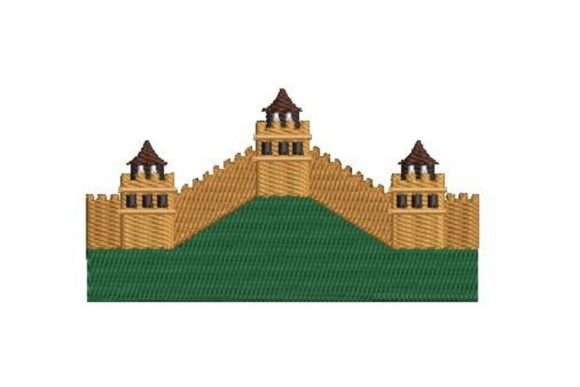
Reviewing the Great Wall of China for Craft Market Embroidery
As an embroidery designer preparing my booth for a weekend craft fair, every design needs to earn its place on my product lineup. Today, I’m looking at a potential addition: the Great Wall of China embroidery design. My review is based purely on its real-world potential to sell, look good in person, and be practical to produce for fellow craft fair product makers and Etsy sellers.
First Impression and Design Mood
The title Great Wall of China immediately evokes a sense of historical grandeur and travel. This isn’t a cute, funny, or farmhouse motif. It leans into decorative, educational, and premium territory. For customers, it suggests a connection to culture, history, or personal travel memories. At a bustling handmade market, this design stands out by being distinctly elegant and thematic, rather than purely whimsical. It feels like a design for someone who appreciates narrative and craftsmanship in their handmade product.
Product Performance: Where This Design Shines
Not every machine embroidery design works on every product. I evaluate based on my typical table display: tote bags, aprons, tea towels, caps, patches, pouches, pillow covers, and giftable items.
For the Great Wall of China, I see its strongest application on items where the design can be a focal point and where its theme enhances the product’s use. A tote bag design or a market bag with this embroidery feels like a statement piece—a bag for someone with a global mindset. An apron embroidery for a home chef who loves world cuisines could be a beautiful fit. A pillow cover transforms a living space into a more curated, travel-inspired environment.
Embroidered patches of this design could be fantastic for collectors, travelers, or educators, but scale is crucial. The design’s complexity needs to be assessed for small sizes. As a small shop product, a simple fabric pouch with this motif becomes a giftable item for a history buff or student. Tea towel embroidery is a possibility, but the fabric texture of a linen towel must be considered—a highly detailed design might get lost on a textured weave.
Practical Selling & Production Points
When you're producing for a fair, you need designs that are efficient, photograph well, and are easily understood by customers in a glance.
The Great Wall of China design is likely to be complex, depicting a series of fortifications. This means customers will recognize it instantly if they have an interest in the subject. However, this complexity directly impacts production. You must consider stitch density. Highly dense areas can make embroidery challenging on thicker fabrics like canvas for bags, or on curved surfaces like caps. It may require more robust stabilizer and careful selection of hoop size.
For online sales, like Etsy listings, this design can photograph beautifully if the details are clear. Creating a printable mockup is helpful, but nothing beats a real photograph of a finished product. The value perception is high: a well-executed, complex design on a tote bag looks more premium than a simple graphic, justifying a higher price point.
Batch production requires consistency. If the embroidery file has many color changes or long stitch times, it might not be the most efficient for making dozens of identical items. This design feels more suited as a standout, lower-volume item in your booth, enhancing your brand consistency if your shop leans into cultural or geographic themes.
Careful-Use Notes for Embroidery Designers
Before running this on any product, a designer must do their homework. Here are my direct notes for anyone considering the Great Wall of China for commercial embroidery.
- Test on Scrap Fabric First: Always run the design on a scrap of the exact fabric you plan to use (canvas, linen, cotton twill). Check for puckering or thread breaks in dense areas.
- Check Thread Contrast: If the design has many similar tones (stone, mountain colors), stitch it on both light and dark fabric to ensure details remain visible. Contrast is key for customer attention.
- Review Spacing and Tiny Details: Are there tiny towers or small lettering? These might vanish at smaller hoop sizes, making the design unsuitable for patches or caps unless simplified.
- Inspect Stitch Density: A high-density design can be stiff on flexible items like pouches or can wear quickly on frequently used items like aprons.
- Use the Right Stabilizer: For textured towels or tricky fabrics, the correct stabilizer is non-negotiable to maintain clarity.
- Create One Real Mockup: Before committing to production, make one complete, sale-ready product. See how it looks in person, holds up, and feels. This informs your pricing and display strategy.
- Compare Fabric Colors: Offer this design on a few classic background colors (natural linen, black canvas, white cotton) to see which combination gets the most positive reaction.
- Confirm Commercial Licensing: As a digital embroidery file, you must absolutely verify your license allows you to sell the finished product at craft fairs or online. Never assume.
Booth Display Strength and Buyer Engagement
At the fair itself, how does this design help you sell? A Great Wall of China embroidered tote bag displayed prominently on a shelf draws a different kind of customer. It sparks conversation. Someone might point at it and share their travel story. That buyer engagement is priceless and can turn a browsing customer into a buyer.
It boosts your booth’s visual appeal by showing depth and skill. A booth filled only with small, cute designs can feel homogeneous. Introducing a piece with this scale and theme suggests handmade quality and expertise. It makes your table look curated and thoughtful.
For your craft fair product mix, this design can be the anchor “premium” item. Pair it with simpler, quicker-to-produce items to balance your inventory. It might not be your fastest seller, but it could be your highest-value sale, elevating the perceived quality of everything else on your table.
Final Designer Advice for Implementation
The Great Wall of China is a compelling embroidery theme with clear market potential in the Asia-inspired niche. Its success, however, hinges entirely on technical execution and product pairing. Do not skip the testing phase. Choose products where the design’s grandeur can be fully appreciated—larger tote bags, pillow covers, or framed hoop art are likely safer bets than tiny items.
Photograph your finished products in clean, bright light to capture all the details for your online listings. And finally, listen to your customers at the fair. If they linger on this design, ask questions, or share their own connections to it, you’ve found a winner. That real-world feedback is the ultimate review for any handmade shop product.