Wine Helps: A Craft Fair Designer's Review
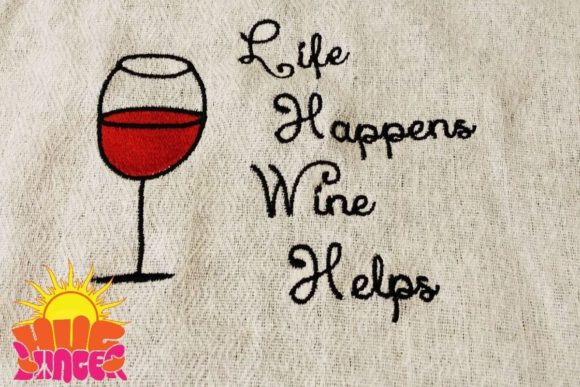
When preparing for a weekend craft fair, selecting the right machine embroidery designs is as crucial as choosing the right fabrics. As an embroidery designer reviewing products for my booth, I look for designs that translate seamlessly from a digital embroidery file to a tangible, saleable product. Today, I’m evaluating Wine Helps, a design explicitly marketed for pillows, dish towels, napkins, and aprons.
First Impression: Fun and Conversational
The title Wine Helps immediately sets a lighthearted, relatable mood. It doesn’t scream rustic or elegant; it leans more towards a casual, funny, and conversational style. This is a design that speaks directly to a common, shared experience. In a bustling market setting, that instant connection is a huge advantage. A customer glancing at a booth sample will understand the sentiment at a glance, which is key for quick engagement.
Where Wine Helps Stands Out in a Booth Display
Imagine a table filled with embroidered tote bags, aprons, tea towels, and pillow covers. Wine Helps would act as a focal point among more decorative or minimal designs. Its strength is its humor and clarity. On a crisp white tea towel hanging from a display rack, it would pop. Stitched onto a dark canvas tote bag, it would become a bold statement piece. The design feels especially suited for kitchen and home goods, aligning perfectly with its described product categories.
Best Product Candidates for Maximum Sales
Based on the description, the suggested products are excellent starting points. However, for a craft fair, I would prioritize items that are quick to produce, have high perceived value, and are easy for customers to visualize using.
- Kitchen Towels & Napkins: These are low-cost, fast-to-embroider items that sell well as impulse purchases. Wine Helps on a high-quality linen dish towel feels like a premium, handmade product.
- Aprons: A well-placed embroidery on an apron pocket or chest area turns a functional item into a personality piece. It’s a great giftable handmade item.
- Pillow Covers: This elevates the design into a home decor product, appealing to a different buyer segment. A small, accent-sized version on a throw pillow could be very effective.
- Tote Bags & Market Bags: While not listed, a simple canvas tote is a craft fair staple. The design’s conversational nature makes the bag a walking advertisement for your booth’s style.
Practical Production & Selling Points
Turning a digital embroidery file into a profitable craft fair product requires practical consideration.
Design Scale & Clarity
For Wine Helps, the most critical pre-production step is testing the design size. Since the description doesn’t specify exact hoop sizes or stitch counts, I must advise: always check these details in the actual embroidery file before production. The phrase likely involves lettering. Tiny lettering can lose clarity on textured towels or curved cap surfaces. I would test it first as a larger focal design on an apron to assess stitch density and then try a smaller version for a tea towel accent. It must remain legible when stitched small.
Photography & Batch Production
This design should photograph well for Etsy listings or printable mockups because it’s graphic and text-based. Good contrast between thread and fabric will make online images crisp. For batch production—creating ten identical tea towels, for example—its simplicity is a benefit. Once optimized with the right stabilizer and hoop size, it should be repeatable without excessive thread changes or overly dense stitch areas that wear on machines.
Customer Attention & Product Value
Wine Helps adds value by adding personality. A plain apron becomes a witty gift. A simple pillow becomes a conversation starter. In the booth, products featuring this design engage buyers through shared humor, potentially increasing dwell time and sales. It enhances handmade quality by showing thoughtful, relevant design choice, not just generic decoration.
Careful-Use Notes for the Embroidery Designer
Before committing to a full production run for my craft fair booth, my process involves several key checks.
- Test on Scrap Fabric: First, I run the design on scrap fabric similar to my final products—linen for towels, canvas for bags. This reveals any issues with stitch density on thicker fabric or tension.
- Check Thread Contrast: I experiment with thread colors against various fabric colors. A classic red or burgundy on light fabric might be ideal, but a bright white or gold on dark fabric could also make a stunning, high-contrast small shop product.
- Review Spacing & Hoop Size: I confirm the design fits comfortably in a standard hoop for my target product. For example, a tea towel might need a 4x4 hoop, while an apron pocket might require a 5x7.
- Inspect Stitch Density: I look for overly dense areas, especially if the design includes filled elements. High density can cause puckering on towels or napkins, requiring heavier stabilizer.
- Create a Real Mockup: I always produce at least one finished, real-world mockup—a completed tea towel or pillow cover—to judge its physical appeal and durability before batch production.
- Confirm Commercial Licensing: The description notes it comes with multiple embroidery file formats for multiple machines, but I must verify the license explicitly permits commercial embroidery and selling finished products at craft fairs or on Etsy.
Final Judgment for the Craft Fair Entrepreneur
Wine Helps is a promising design for the handmade market. Its fun, clear message has direct appeal in a face-to-face selling environment like a craft fair. It aligns perfectly with popular product categories that are both giftable and utilitarian. The potential pitfalls are typical for any text-based design: ensuring legibility at smaller sizes and managing production for batch efficiency. With careful pre-testing on fabric textures and with proper stabilizer, it can become a strong, attention-grabbing part of your booth display, adding a layer of relatable humor to your brand’s offerings. For embroidery business owners and Etsy sellers, it represents a digital embroidery file that, with a little production savvy, can translate into a range of profitable, engaging handmade products.